spot-vs-open-vs-contract-logistics-pricing-strategy-bangalore
Spot vs. Open vs. Contract Logistics: Pricing, Risk, and Fleet Stability in Bangalore
Navigating the logistics landscape requires more than just moving freight from point A to point B. For operators and transport founders in Bangalore, the core of long-term profitability lies in how you structure your market commitments. Balancing your operations across different pricing and agreement models determines your cash flow security and asset utilization.
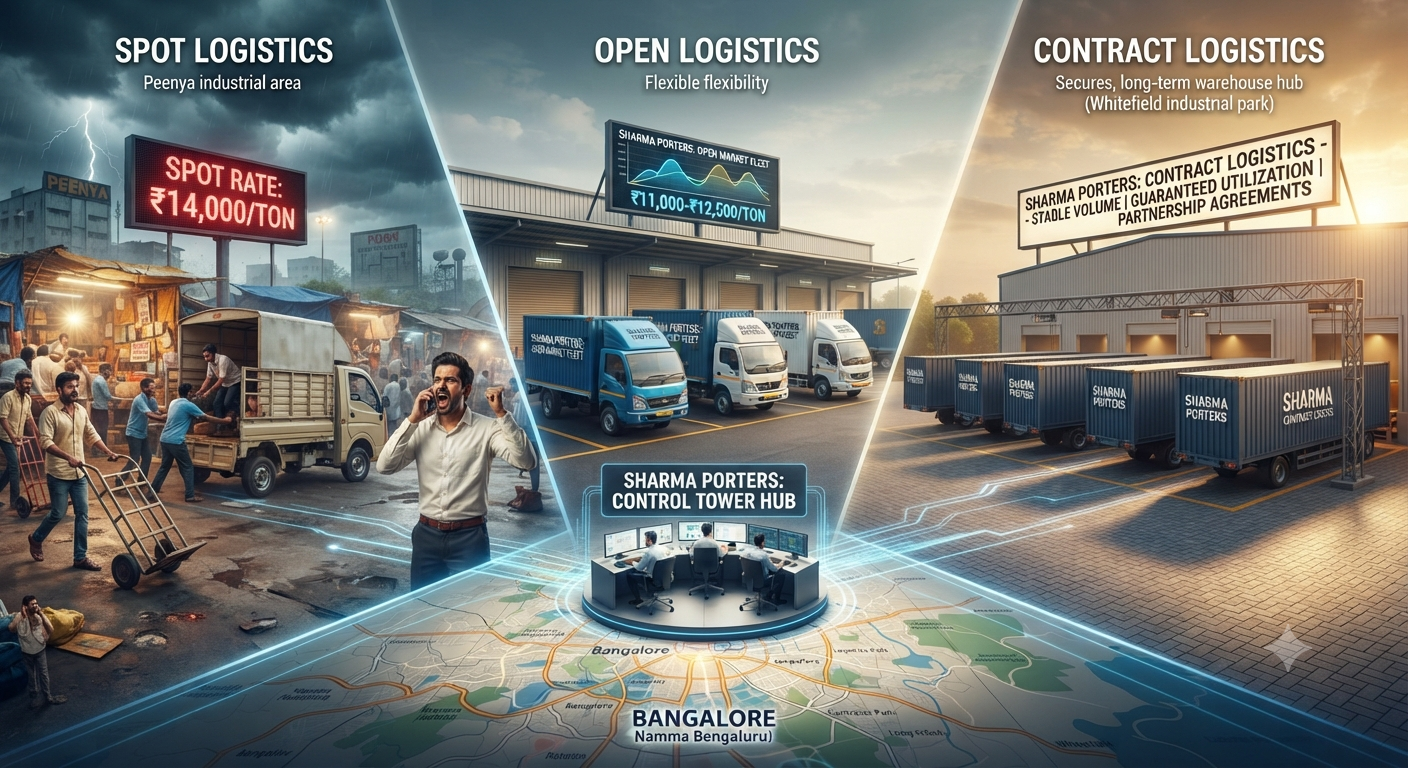
1. Spot Logistics: High Risk, High Reward, and Immediate Demand
- The Nature of Spot Rates: Spot logistics operates on immediate, on-demand market requirements. When a client urgently needs a vehicle for a sudden dispatch, you quote the prevailing market rate.
- The Volatility: While spot bookings can offer high short-term margins during peak demand or transport crunches, they suffer from extreme unpredictability. Fleet owners cannot rely solely on spot rates for sustainable working capital.
- The Execution Model: It requires a vast network of available vehicles and quick-fire decision-making to capture high-paying ad-hoc loads without letting trucks sit idle.
2. Open Logistics: Flexibility and Fluid Market Adaptation
- The Open Market Approach: Open logistics sits between rigid long-term commitments and volatile spot pricing. It caters to recurring clients who do not want locked-in long-term contracts but require consistent, periodic transport support.
- The Balancing Act: This model provides moderate flexibility for both the transporter and the shipper. Rates fluctuate based on general seasonal trends rather than minute-to-minute spot panic, making it easier to forecast weekly revenue.
3. Contract Logistics: Stability, Long-Term Partnerships, and Scale
- The Power of Contracts: Contract logistics forms the backbone of sustainable transport enterprises like Sharma Porters. By securing long-term service agreements with factories, corporate offices, and warehouses, you lock in steady, predictable monthly volumes.
- Guaranteed Utilization: Fixed contracts ensure that your fleet has guaranteed daily or weekly runs, slashing idle time and stabilizing cash flow management.
- Deepening Business Trust: Unlike transactional spot bookings, contract relationships build deep operational synergy over time, allowing transport companies to invest confidently in fleet expansion and driver stability.
Comprehensive Q&A: Spot vs. Open vs. Contract Logistics Strategy
Q1: What defines Spot Logistics in the transport industry?
A: Spot logistics involves immediate, on-demand transport bookings fulfilled at prevailing short-term market rates.
Q2: What is the primary advantage of taking on Spot Logistics loads?
A: It offers high short-term profit margins during periods of urgent market demand or capacity crunches.
Q3: What is the main drawback of relying entirely on a spot-market strategy?
A: It brings extreme revenue unpredictability and leaves transport assets vulnerable to sudden downtime.
Q4: How does Open Logistics differ from spot and contract models?
A: Open logistics provides a middle ground of flexible, recurring transport service without the strict rigidity of long-term legal lock-ins or the chaotic volatility of spot rates.
Q5: Why is Contract Logistics vital for a scaling transport company?
A: It provides steady, predictable volume, secures consistent cash flow, and eliminates fleet idleness through regular scheduled operations.
Q6: How do B2B relationships influence Contract Logistics?
A: Long-term contracts strengthen mutual business confidence, allowing operators to build deep operational trust and structured service-level agreements.
Q7: How does this model tie into overall fleet management?
A: Balancing spot agility with contract stability allows logistics founders to maximize asset utilization across both commercial and domestic sectors.
Q8: Where does Sharma Porters position its primary operational focus?
A: Sharma Porters leverages structured frameworks to secure reliable, transparent transport operations across Bangalore's commercial and residential networks.
Q9: How can operators hedge against market rate crashes?
A: By securing a healthy baseline of contract logistics to cover fixed operating costs while using spot opportunities for surplus revenue.
Q10: Where can transport teams review foundational scheduling frameworks?
A: Teams can cross-reference timing strategies via the Weekdays vs. Weekend Logistics Guide.
Gallery