open-vs-closed-container-trucks-logistics-bangalore
Open vs. Closed Container Trucks: A Strategic Fleet Decision for Bangalore Logistics
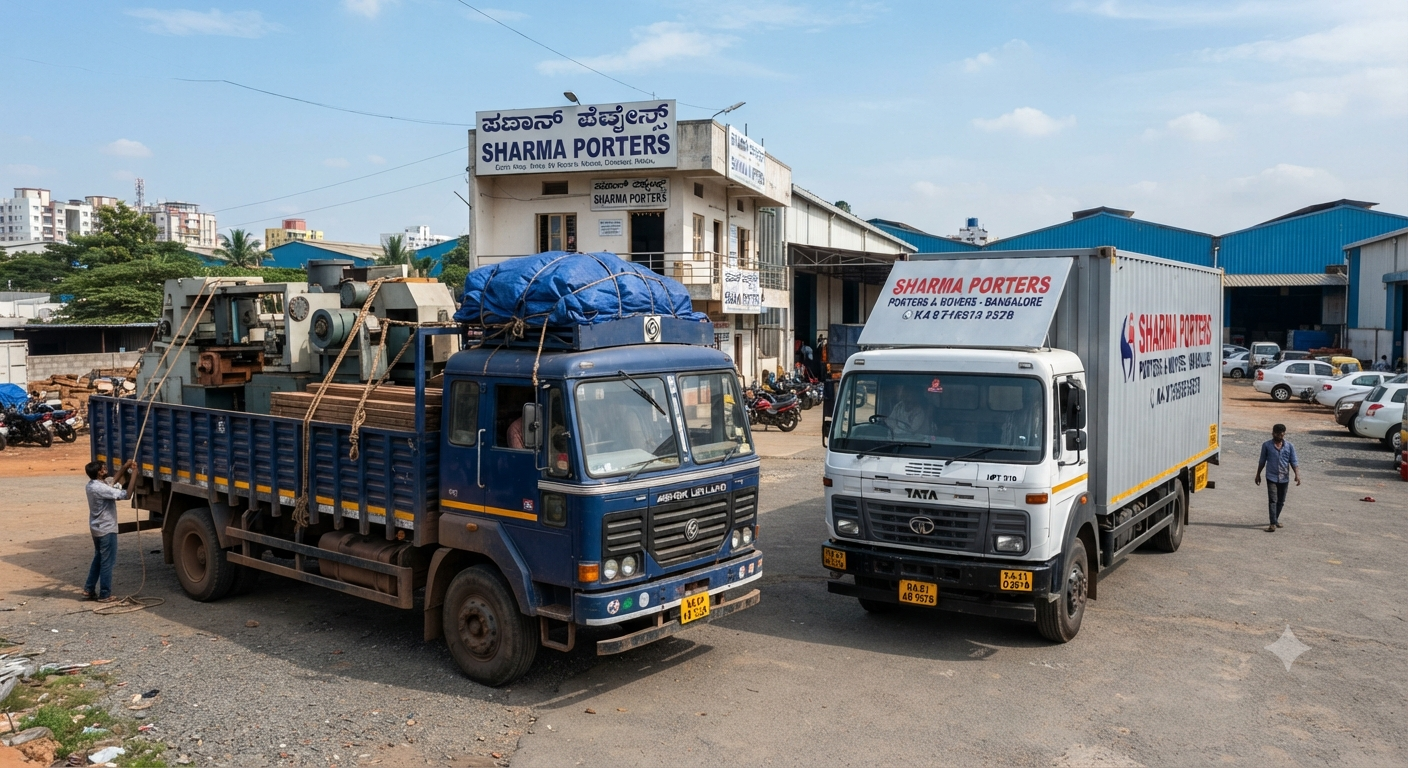
When you are setting up or planning to scale your transport and moving operations across Bangalore, choosing between open and closed container trucks is not just an operational detail—it is a foundational business decision.
Unlike minor routing tweaks, the vehicle body type you choose locks you into a specific market segment, cost structure, and customer base. Fleet owners cannot afford to make this choice in haste.
1. Open Trucks: Flexibility, Reach, and High-Volatility Operations
Open trucks are the go-to choice when running long-distance movements where your strategy relies on securing return loads from the open market.
- Universal Cargo Freedom: You can load virtually any type of material, from industrial goods to oversized machinery.
- Weather Flexibility: Customers generally only worry about shipment safety during the monsoon season. For the rest of the year, they are flexible and accommodating.
- Operational Overheads: While open trucks offer great versatility, the maintenance cost is tangible. You face continuous upkeep for heavy tarpaulins, regular replacements (especially for multi-axle heavy vehicles like Taurus trucks), and the need for extra helpers just to secure and remove covers. Every single halt requires checking rope grips and periodic rope replacements, alongside regular structural body maintenance.
2. Closed Container Trucks: Contractual Security and High-Value Transit
Investing in closed container trucks is a major capital commitment, typically driven by long-term contractual agreements and specific cargo safety requirements.
- Target Cargo Segments: They are preferred for high-value goods, fast-moving consumer goods (FMCG), household relocations, and sensitive electronic items.
- Corridor Efficiency: Major shipping hubs and port-to-port routes—such as moving containerized cargo from Mumbai Port to Chennai Port—make container investments highly lucrative due to frequent return loads and minimized waiting times.
- App Ecosystem Integration: Digital logistics platforms (like Wheelseye, FR8, and Truck Guru) frequently promise rapid deployment for 20-foot and 32-foot container trucks, whereas open trucks are rarely found readily available on standard instant-booking app networks.
Market Dynamics & Freight Realities
- Freight Cost Variance: Freight charges for open trucks run marginally higher—roughly 6% to 10% extra—largely driven by the manual labor and handling required.
- Specialized Loading: Whenever overhead crane loading is necessary, open trucks remain the absolute first choice for transport businesses due to unrestricted top-access.
- Corridor Demand: The highest demand for both open and closed trucks flows across the key metro and Tier-2 corridors connecting Bangalore, Chennai, Hyderabad, Mumbai, Pune, Ahmedabad, Delhi, Gurgaon, and Kolkata, where both vehicle types drive steady business.
Truck Body Choice Is Yours, But Truck Manufacturers Are the Same
While the truck body style—whether open deck, closed container, or heavy-duty trailer—depends entirely on your payload requirements and operational strategy, the underlying heavy commercial vehicle manufacturers remain trusted industry pillars.
Crucially, all of these major manufacturers give the ultimate choice to the truck buyer by offering cab-chassis options. If you buy only the bare chassis, you have the complete freedom to customize the truck body to your exact specifications. Top companies dominating the market include:
- Open Trucks (Ashok Leyland): Ashok Leyland is exceptionally well-regarded for open truck configurations and rugged haulage chassis. Models like the Ashok Leyland 1618 are popular choices, recognized for heavy-duty durability, solid torque, and strong performance when hauling construction materials and industrial goods.
- Container Trucks (Tata Motors): Tata excels at producing reliable container and haulage options. The Tata LPT 3118 (and its multi-axle variants) serves as a dependable backbone for secure, high-volume goods transport, offering robust build quality and weather-tight protection essential for sensitive cargo.
- Trailer Trucks (BharatBenz): BharatBenz stands out in the heavy tractor-trailer segment. Models like the BharatBenz 4032T are engineered for heavy-duty, long-distance transport corridors, integrating advanced drivetrain technology and superior cab comfort for high-mileage operations.
- Eicher & Mahindra: Both brands provide strong, competitive alternatives across regional and national routes. Eicher’s Pro series delivers consistent fuel efficiency and uptime, while Mahindra’s Blazo series is widely trusted for its structural robustness and heavy hauling margins.
Ultimately, whether you select a factory-built configuration or purchase a bare chassis to customize your upper truck body, the choice is entirely yours to optimize based on your market strategy.
10 Essential Q&A: Open vs. Closed Container Trucks for Sharma Porters Logistics
Q1: Why is choosing between an open truck and a closed container truck a strategic decision for transport operators in Bangalore? A: Choosing a vehicle body type is not a minor routing detail—it is a foundational business decision. The vehicle body you select locks your business into a specific market segment, cost structure, and customer base. Fleet owners cannot afford to make this choice in haste, as it directly dictates your long-term operational viability.
Q2: What are the main operational advantages of choosing open trucks? A: Open trucks offer universal cargo freedom, allowing you to load virtually any type of material, from heavy industrial goods to oversized machinery. They provide top-access convenience and are the absolute first choice when overhead crane loading is required.
Q3: What operational overheads should fleet owners expect with open trucks? A: While versatile, open trucks carry tangible maintenance costs. You face continuous upkeep and regular replacements for heavy tarpaulins (especially on multi-axle heavy vehicles like Taurus trucks), the need for extra helpers to secure covers, periodic rope replacements, rope-grip checks at every halt, and regular structural body maintenance.
Q4: When should a transport business invest in closed container trucks? A: Closed container trucks are typically deployed based on long-term contractual agreements and specific cargo safety requirements. They are the preferred choice for high-value goods, fast-moving consumer goods (FMCG), household relocations, and sensitive electronic items.
Q5: How do digital logistics apps handle open trucks versus closed container trucks? A: Digital logistics platforms (such as Wheelseye, FR8, and Truck Guru) frequently promise rapid deployment for standard 20-foot and 32-foot container trucks. However, open trucks are rarely found readily available on standard instant-booking app networks.
Q6: How do freight charges compare between open and closed trucks? A: Freight charges for open trucks run marginally higher—roughly 6% to 10% extra—which is largely driven by the manual labor, tarpaulin handling, and extra securing required for open-deck transit.
Q7: Which major transport corridors drive the highest demand for both open and closed trucks? A: High demand flows across key metro and Tier-2 corridors connecting Bangalore, Chennai, Hyderabad, Mumbai, Pune, Ahmedabad, Delhi, Gurgaon, and Kolkata, where both vehicle types drive steady, reliable business.
Q8: Are truck manufacturers different for open trucks, container trucks, and trailers? A: No. The underlying heavy commercial vehicle manufacturers remain the same trusted industry pillars regardless of whether you choose an open deck or a closed container. Top companies dominating the market include Tata, BharatBenz, Ashok Leyland, Eicher, and Mahindra.
Q9: Can I buy a bare chassis and customize the truck body to your exact requirements? A: Yes. All major manufacturers offer cab-chassis options, giving the ultimate choice to the truck buyer. If you buy only the bare chassis, you have the complete freedom to customize the upper truck body to your exact specifications.
Q10: Which specific models are recommended for open, container, and trailer configurations? A:
- Open Trucks: Ashok Leyland 1618 is renowned for heavy-duty durability and hauling construction materials.
- Container Trucks: Tata LPT 3118 serves as a dependable backbone for secure, high-volume goods transport.
- Trailer Trucks: BharatBenz 4032T is engineered for heavy-duty, long-distance transport corridors.
- Alternative Options: Eicher’s Pro series delivers consistent fuel efficiency, and Mahindra’s Blazo series is widely trusted for robustness and hauling margins.
Our Founder Jeethendra Sharma also supports logistics companies in scaling their business, helps you boost GBP ranking, and has many similar posts. Check Mission Sena Navigation for more easy decision making.
Gallery