online truck booking app vs traditional vehicle booking methods
Sharma Porters vs. The Lead-Chasing Apps: The True Cost of "Low-Quote" Truck Booking
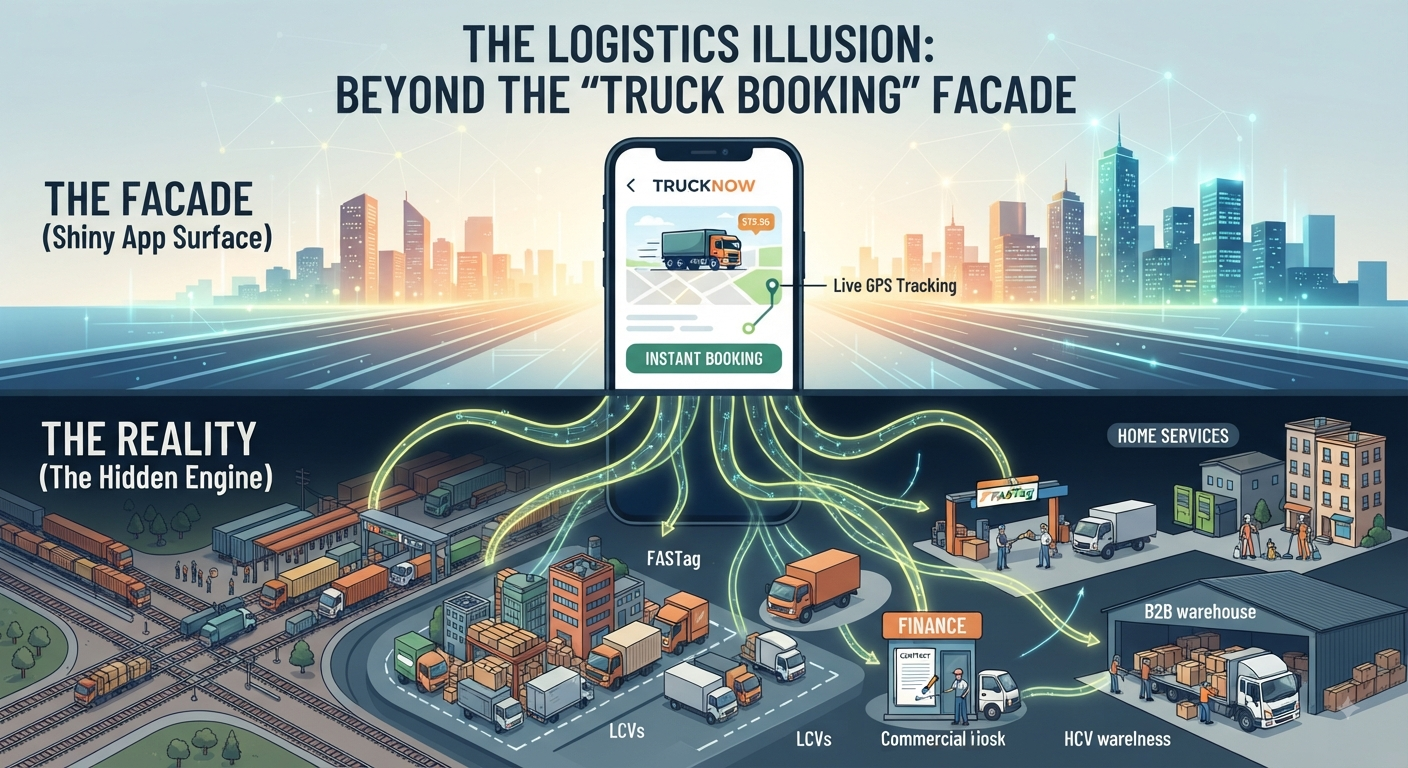
The Logistics Illusion: When Apps Chase Leads Instead of Delivering Service
Take a ride if you want to look past the shiny app interface and examine how modern digital freight platforms actually operate.
While online truck booking apps promise instant, low-cost logistics for both B2B enterprises and B2C retail/household moves, their fundamental operational model is built around volume rather than commitment. As explored in our deep-dive on online truck booking app B2B and B2C traps, these platforms are not dedicated service providers—they are lead-aggregator marketplaces.
Their primary playbook is simple: capture as many leads as possible with an aggressively low quote, push the order into the system, and serve whatever they can. If a deal fails or a truck falls through, the platform still wins because they have monetized the lead or have alternative revenue streams (fintech, FASTag commissions, and cross-sells) to cushion the fall.
The Last-Minute Trap: When the App Fails
This volume-first, low-quote strategy creates a massive trap for shippers and consumers:
- The Race-to-the-Bottom Quote: Apps drop prices artificially to win the booking click, knowing full well that unorganized fleet operators may reject the low freight rate at the final hour.
- The Waiting Game: Customers and businesses wait anxiously until the final minute, relying on an automated screen that shows a driver is "assigned."
- The Last-Minute Breakdown: When the driver backs out or the app fails to secure actual physical supply at that low rate, the shipment stalls completely.
- The Traditional Rescue: Left stranded mid-transit or right on moving day with an unfulfilled digital order, the customer is forced to turn back to trusted, traditional logistics providers who actually own the ground reality, relationships, and operational accountability.
Key Segments: B2B vs. B2C Logistics
|
Feature |
B2B (Business-to-Business) Logistics |
B2C (Business-to-Consumer) & Retail |
|
Primary Use Cases |
Full Truck Load (FTL) for industrial goods, FMCG, raw materials, wholesale distribution. |
Household shifting, local commercial deliveries, small parcel or part-load (PTL) transport. |
|
Vehicle Types |
Heavy Commercial Vehicles (HCVs), 19ft to 32ft container trucks, open trailers, multi-axle trucks. |
Light Commercial Vehicles (LCVs) like Tata Ace, 6–14 ft mini-trucks. |
|
Core Requirements |
Contract stability, digital Proof of Delivery (POD), GST invoicing, bulk freight management, and scheduled dispatches. |
Instant availability, transparent hourly or per-km city rates, verified local drivers, and loading/unloading labor assistance. |
App Lead-Chasing vs. Traditional Ground Commitment
|
Operational Metric |
Lead-Chasing Digital Apps |
Traditional Logistics (Sharma Porters) |
|
Commitment Level |
Volume-driven; focuses on generating and flipping high volumes of leads. |
Accountability-driven; focuses on executed dispatches and guaranteed fulfillment. |
|
Pricing Strategy |
Low-quote tactics designed to hook the user, often resulting in hidden surcharges or last-minute cancellations. |
Transparent, realistic market pricing backed by actual asset availability and human coordination. |
|
Fallback Mechanism |
If a truck fails to show, the user deals with automated chat loops and support tickets. |
If an issue arises, experienced local operators step in directly to secure alternative transit immediately. |
|
Revenue Reliance |
Relies on fintech, advertisements, subscriptions, and platform markups if freight deals fail. |
Relies purely on successful, reliable physical transport and client trust. |
10 Reasons Why Relying on Lead-Chasing Apps is a Trap
Q1: Why do online truck booking apps quote prices that seem too good to be true?
- A: They use aggressive "loss-leader" or low-quote tactics purely to capture the lead. Once they lock you in, they scramble to find a driver willing to take the cut-rate, often resulting in cancellations or sudden detention price spikes.
Q2: What happens when an app fails to supply a vehicle at the final hour?
- A: Because apps prioritize lead acquisition over guaranteed fulfillment, a driver backing out leaves the customer stranded with zero physical recourse, forcing a frantic last-minute scramble.
Q3: How do apps profit even when a freight booking fails?
- A: Even if your specific truck booking falls through, the app has already captured your user data, phone number, and intent, which they monetize through ecosystem cross-sells, financial services, or data sharing.
Q4: Why do traditional logistics providers offer better reliability during peak seasons?
- A: Traditional providers build long-term relationships with fleet owners and maintain dedicated capacity, whereas apps rely entirely on volatile algorithmic spot-bidding that breaks down when demand spikes.
Q5: How does the "low quote" trap affect business working capital?
- A: A failed shipment or delayed delivery caused by an app cancellation can halt production lines, ruin retail supply chains, and cost businesses far more than any initial upfront savings promised by the app.
Q6: Why is human accountability missing in lead-aggregator models?
- A: App interactions are handled by automated customer support bots and distant call centers. Traditional logistics operations rely on accountable local managers whose reputation depends on successful delivery.
Q7: Can algorithms genuinely predict ground-level vehicle availability?
- A: No. Algorithms only look at historical data and digital pings. They cannot account for local driver strikes, sudden mechanical breakdowns, or localized traffic bottlenecks the way an experienced ground operator can.
Q8: Why do apps push hidden detention and waiting fees post-booking?
- A: Since their initial quote is artificially low just to secure the lead, they rely on post-dispatch clauses—like loading dock delays or multi-point pickup fees—to recover their margins.
Q9: How does traditional transport protect cargo safety better than an app matchmaker?
- A: Traditional movers and packers maintain direct oversight over the loading crew and transport personnel, minimizing the risk of sub-contracted ghost drivers and cargo theft.
Q10: Why are businesses and households returning to traditional methods like Sharma Porters?
- A: Because reliability, physical verification, and guaranteed execution beat empty digital promises every single time when valuable goods are on the line.
Gallery