intercity-vs-intracity-vs-all-truck-booking-logistics-service-bangalore
Intercity vs. Intracity vs. All-Truck Booking Logistics: Strategy, Scale, and Solopreneur Execution
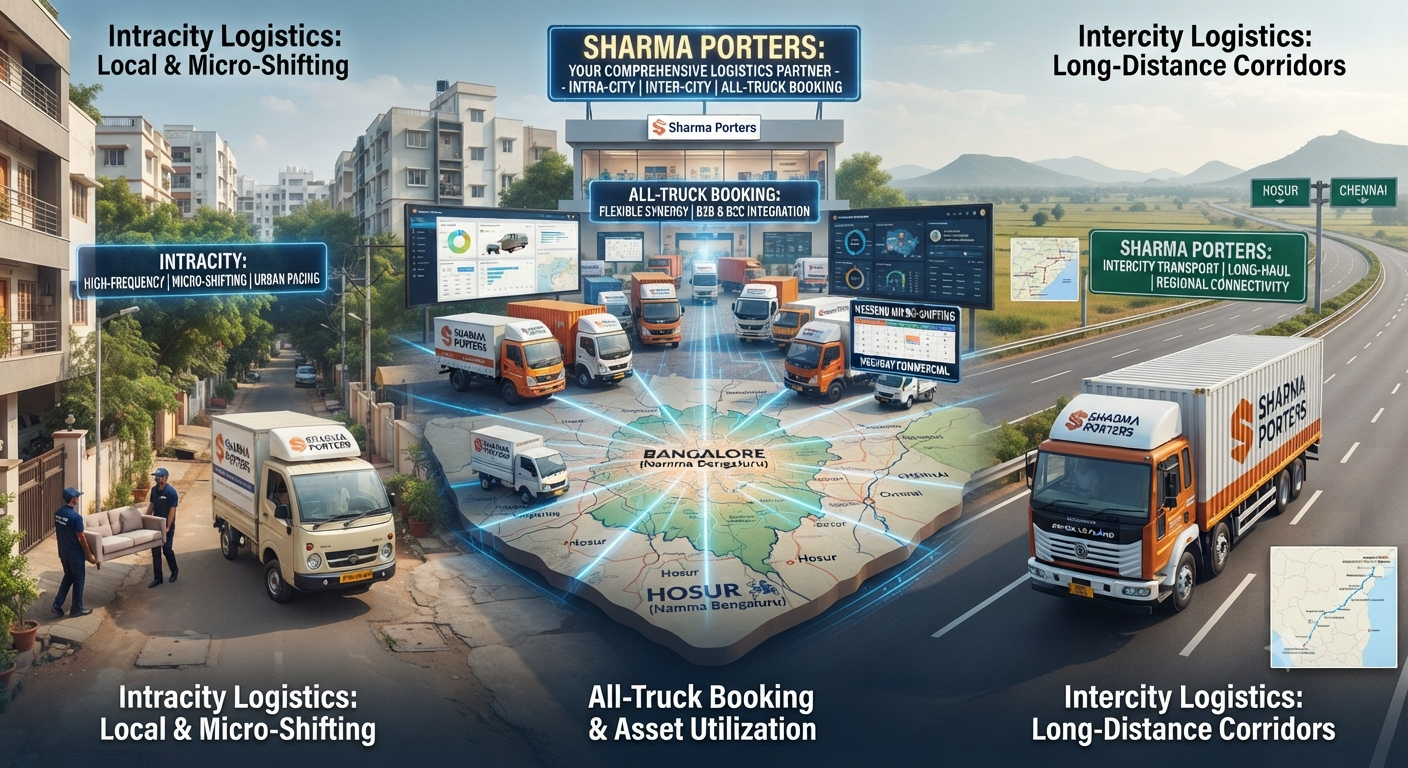
Deciding whether to focus your logistics enterprise on intracity, intercity, or a complete all-truck booking model is one of the most critical foundational choices for a transport founder. As highlighted in our Packers and Movers Cost Calculator Guide, understanding cost structures and distance variables dictates how you manage your capital. For solopreneurs and growing networks like Sharma Porters, mastering both models allows you to capture maximum market share despite the operational juggling required.
1. Intracity Logistics: High-Frequency Local Shifting & Urban Pacing
- The Urban Core: Intracity logistics focuses on local movements within Bangalore—shifting households across neighborhoods, micro-fulfillment, and short-haul commercial distribution.
- Cash Flow Velocity: Local jobs turn around fast, offering quicker cash cycles and daily asset utilization.
- The Solopreneur Grind: Because local moves happen constantly, managing manpower, vehicle dispatch, and customer touchpoints locally demands sharp day-to-day oversight.
2. Intercity Logistics: Long-Distance Hauls & Route Planning
- Expanding Horizons: Intercity logistics covers long-distance shifting and freight transport across state borders or distant cities.
- Capital & Planning: These runs require deeper cash reserves, meticulous compliance, driver allowance management, and contingency planning for long highway stretches.
- Higher Yields per Trip: While frequency is lower than local shifting, single intercity jobs yield larger ticket sizes and build robust regional connectivity.
3. All-Truck Booking: The Comprehensive Operational Model
- Doing It All: Combining intracity and intercity services under an all-truck booking model transforms your platform into a complete logistics solution.
- Scaling Through Skill: As a solopreneur or founder who handles it all, mastering people management, driver relations, and cash flow control is what makes this model fully scalable.
- Network Synergy: Linking local neighborhood demand hubs directly to long-distance transport routes ensures that your fleet never stays idle, maximizing revenue across every truck type.
Case Study for Logistics Entrants: The Sharma Porters Execution Blueprint
To achieve maximum asset utilization and maintain regular cash flow, logistics operations can successfully lead by example through strategic diversification:
- Micro-Shifting on Weekends: By offering specialized Micro House Shifting Services in Bangalore – Small Moves Made Easy With Sharma Porters for Nano Packers and Movers, operators can capture high weekend consumer demand without needing massive initial capital.
- Lean Capital & Small Trucks: Operating with Sharma Porters bets on Small Truck Goods Transport Business Company in Bangalore proves that a low-capital business model can thrive.
- Dual B2B & B2C Integration: Blending both sectors unlocks B2B and B2C Transport Services in Bangalore – Endless Logistics Possibilities to keep fleets moving consistently.
- Long-Term Intercity Expansion: For long-term growth, scaling into corridors like the Bangalore Chennai Logistics Corridor creates reliable, multi-state revenue.
- Tier 2 and Tier 3 Focus: Positioning services around expanding hubs like Hosur as part of bangalore city village logistics proves that developing smaller urban and semi-urban corridors is the future of resilient business growth.
Comprehensive Q&A: Intercity vs. Intracity vs. All-Truck Logistics
Q1: What is the primary focus of Intracity Logistics?
A: It centers on short-distance, intra-city movements, local home shifting, and urban commercial distribution.
Q2: How does Intercity Logistics differ in scope?
A: It involves long-distance transport and inter-state or cross-city relocation runs.
Q3: What financial advantage do local intracity jobs provide?
A: They offer faster turnaround times and quicker cash flow velocity for daily operational expenses.
Q4: What are the key requirements for running successful intercity routes?
A: Stronger working capital, careful route planning, statutory compliance, and highway management.
Q5: What tool assists customers and operators in evaluating shifting charges?
A: The Packers and Movers Cost Calculator Guide.
Q6: Why do solopreneurs sometimes adopt an all-truck booking approach?
A: To capture both local and long-distance market demand, maximizing fleet utilization despite the multitasking required.
Q7: What core skills are essential for scaling an all-truck booking model?
A: Exceptional people management, disciplined cash flow control, and hands-on operational leadership.
Q8: How does combining both models prevent vehicle idleness?
A: Local weekend shifting volume balances out with steady intercity commercial bookings across the weekly cycle.
Q9: Why are Tier 2 and Tier 3 cities vital for future logistics expansion?
A: They offer emerging commercial corridors, such as the Hosur and Bangalore-Chennai routes, ensuring long-term business scalability.
Q10: How can transport operators review broader scheduling frameworks?
A: By referencing the Weekdays vs. Weekend Logistics Guide.
Gallery