full-load-vs-part-load-logistics-bangalore
Full Load (FTL) vs. Part Load (LTL) Logistics: A Strategic Framework for Transport Business Owners
When you establish your footprint in the logistics sector, choosing your core service offering is not a minor operational preference—it is a critical long-term strategic decision. Whether you build your reputation around Full Truck Load (FTL) transport or Part Load / Less Than Truckload (LTL) transport will define your capital requirements, operational workflows, and customer base.
1. Full Load Transport (FTL): Speed, Security, and Exclusivity
Many assume that FTL is only for massive industrial consignments that completely fill a vehicle, but that is a misconception. FTL means renting a truck exclusively for your shipment, which is essential under specific business conditions:
- Time-Critical Delivery: When your shipment must reach its destination on a strict schedule without multi-stop delays.
- High-Value and Fragile Cargo: When security is paramount and you want to minimize handling risks.
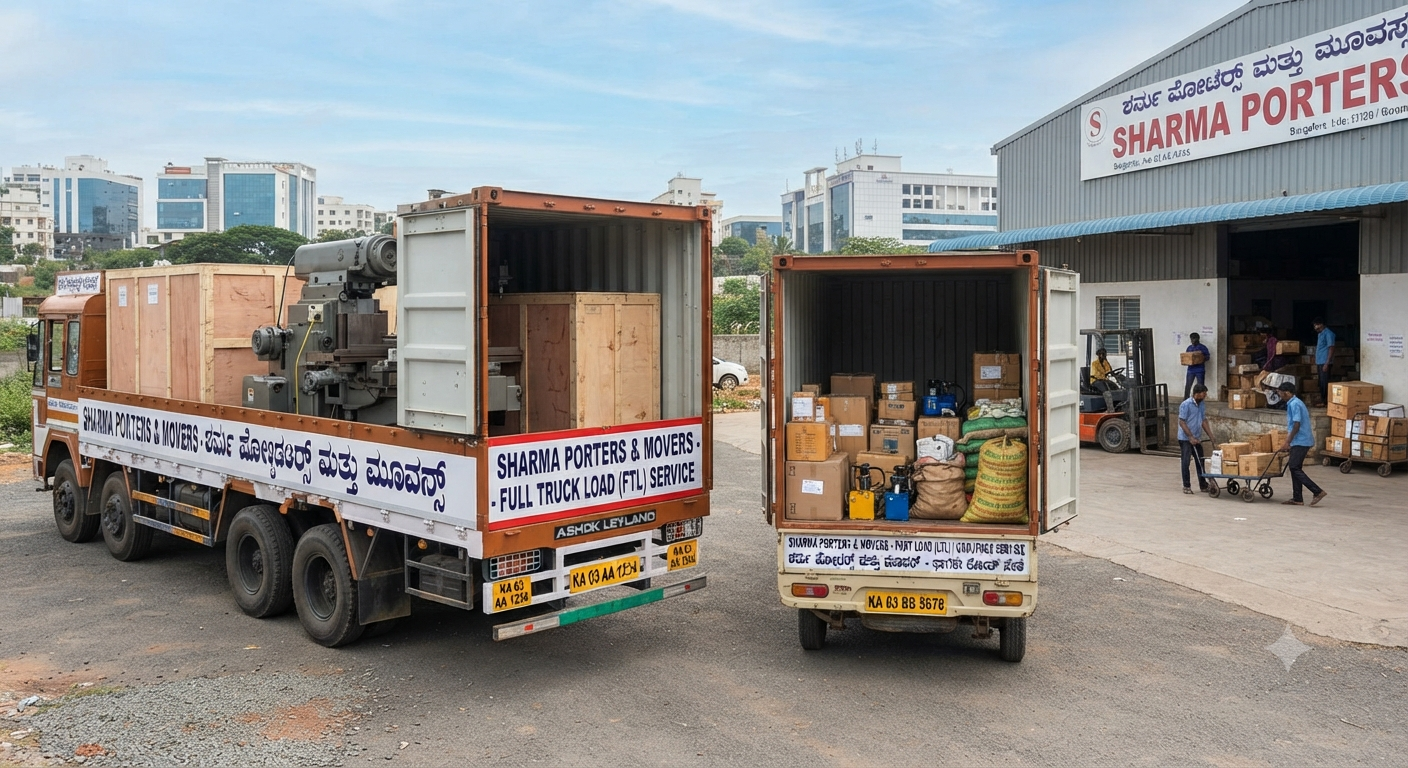
- Flexible Sizing & Weight Capacities: FTL is available across a massive scale. You can secure trucks ranging from 8 feet to 32 feet in length, and handle payload weights from 100 kg to 30,000 kg. Common sizes include 8 ft, 9 ft, 10 ft, 14 ft, 17 ft, 19 ft, 20 ft, 22 ft, 24 ft, and 32 ft commercial vehicles.
- The 350-Kilometer Sweet Spot: For distances around 350 km, moving from part-load to an FTL model using small commercial vehicles (like the Tata Ace, Ashok Leyland Dost, or Mahindra Pickup) can drastically lower local pickup overheads and handling damage.
2. Part Load Transport (LTL): Volume Aggregation and Economy
Part-load shipping serves an entirely different operational ecosystem, focusing on lower-value or smaller-quantity goods managed through cargo consolidation:
- Ideal Cargo Types: Commonly utilized by manufacturers of industrial hardware, hydraulic pumps, spare parts, and agricultural equipment where individual consignments do not warrant an entire vehicle. (Bulk agricultural produce is also traditionally moved via railway networks as an economical alternative).
- Operational Model: Part-load requires a dedicated warehouse facility and feeder vehicles (like small pickup trucks) to execute multi-point local pickups. Shipments are consolidated at a hub before dispatch. While extended payment credit cycles are common, profitability is driven entirely by high-volume aggregation and agency commissions.
Capital Investment & Cash Flow Realities
- Full Truck Load (FTL) Investment: Capital requirements scale with your customer payment life cycles and vehicle size. Moving heavy industrial machinery (such as milling machines or elevators) over long-haul corridors like North India requires substantial working capital to issue advance payments to truck drivers or owners, given the longer lead times.
- Part Load (LTL) Investment: Requires investment in local warehousing space, consolidation infrastructure, and a fleet of feeder vehicles for multi-point urban pickups.
10 Essential Q&A: Full-Load vs. Part-Load Logistics
Q1: Is Full Load (FTL) transport only meant for shipments that completely fill a truck? A: No. Even if your shipment does not occupy 100% of the truck bed, you choose FTL when you need guaranteed on-time delivery, are moving high-value or fragile cargo, or require an exclusive vehicle to prevent multi-stop transit risks.
Q2: What size range is available for Full Truck Load transport? A: FTL options span vehicle lengths from 8 feet to 32 feet, accommodating weight capacities anywhere from 100 kg to 30,000 kg across various multi-axle and light commercial configurations.
Q3: When should transport operators consider FTL for short-to-medium distances? A: For distances around 350 km, migrating small-scale shipments to an FTL setup using compact vehicles (like Tata Ace, Ashok Leyland, or Mahindra pickups) can significantly reduce local pickup and handling overheads.
Q4: What types of goods are best suited for Part Load (LTL) transport? A: Part load is ideal for low-value products, lower-quantity manufacturing outputs, spare parts, industrial pumps, hydraulic components, and regular commercial goods that do not require an exclusive vehicle.
Q5: How does the operational setup differ for a Part Load business model? A: Unlike FTL, an LTL business requires a physical warehouse space, sorting facilities, and small pickup vehicles to execute multi-point collection before consolidating freight for long-haul transport.
Q6: How do upfront capital requirements compare between FTL and LTL? A: FTL often demands higher initial capital if you finance long-haul movements (like North India corridors) requiring large advance payments to truck owners. LTL requires capital directed toward hub warehousing, local feeder fleets, and managing credit terms balanced by high-volume turnover.
Q7: Can small business owners leverage agency commissions in Part Load transport? A: Yes. Part-load networks frequently incorporate agency commissions and multi-party coordination to aggregate smaller shipments efficiently across common routes.
Q8: Why is choosing between FTL and LTL considered a strategic long-term decision? A: Because it locks your transport business into a specific financial model, cash flow cycle, infrastructure requirement (warehousing vs. direct point-to-point dispatch), and target customer vertical.
Q9: How do fragile goods influence the choice between FTL and LTL? A: Fragile or sensitive items are typically better suited for FTL transport because exclusive loading eliminates the intermediate loading, unloading, and re-stacking steps inherent in multi-client part-load warehouses.
Q10: Where can transport operators find more guidance on scaling commercial logistics? A: Fleet owners and transport entrepreneurs can explore strategic insights and regional support resources via Sharma Porters and the Mission Sena Navigation portal.
Our Founder Jeethendra Sharma also supports logistics companies in scaling their business, helps you boost GBP ranking, and has many similar posts. Check Mission Sena Navigation for more easy decision making.
Gallery