commercial-vs-domestic-logistics-bangalore
Commercial vs. Domestic Logistics: Branding, Scaling, and Overcoming the Trust Deficit in Bangalore
While your Weekdays vs. Weekend Logistics Guide tackles scheduling and fleet utilization across the 7-day cycle, branding your operations requires a deeper look at the core structural differences between moving B2B freight and serving individual households.
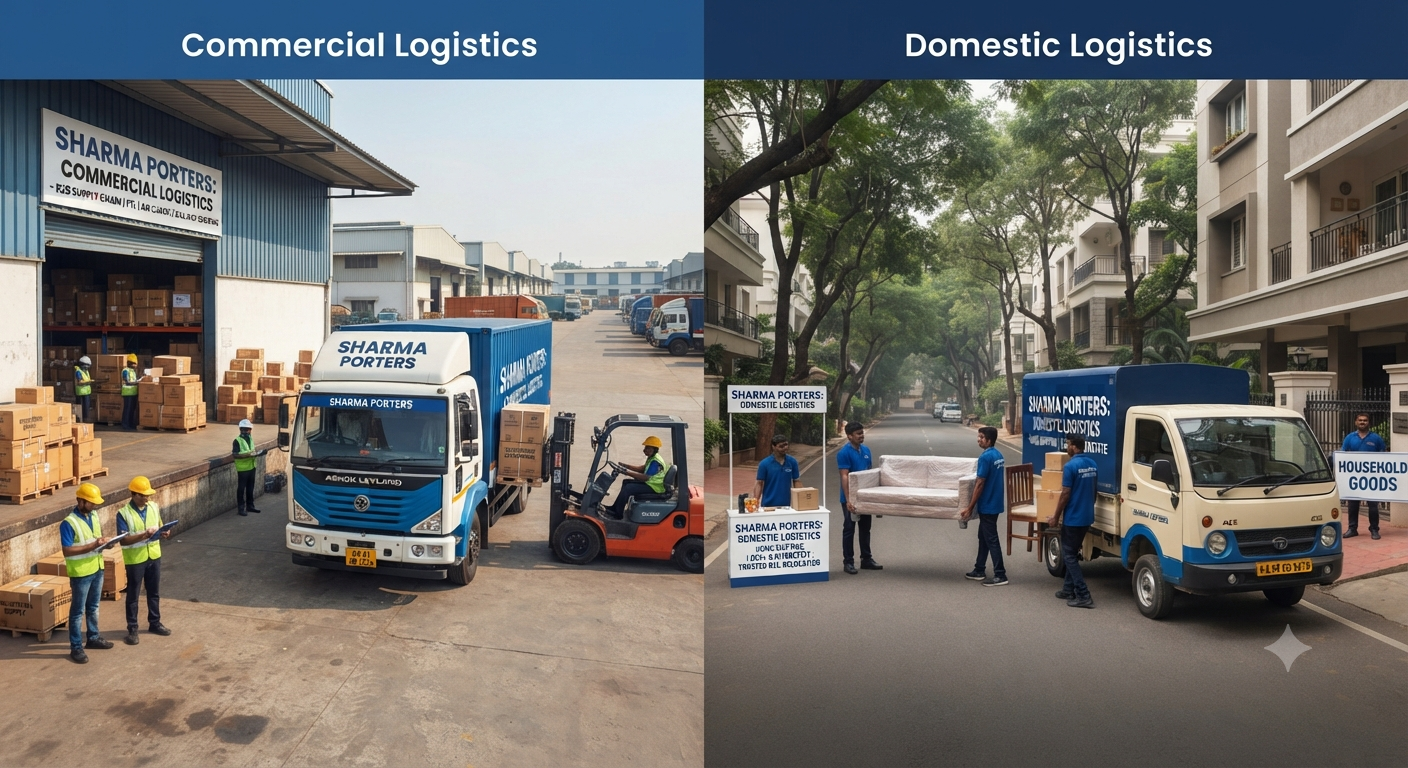
1. Commercial Logistics: Scale, Documentation, and Deep Pockets
- The Forte of Scale: If your business excels at handling rigorous paperwork, statutory compliance, and has solid working capital at hand, commercial logistics becomes your primary growth engine. It accounts for the maximum volume of overall market business.
- Service Ecosystem: Under this umbrella, you handle courier networks, railway parcel bookings, FTL/LTL truck booking, freight forwarding, commercial shipping, and airline cargo booking.
- The Financial Engine: Commercial depth requires deep pockets and a strong stomach for scaling. Margins here do not come from single-trip markups; they are driven entirely by high volume and disciplined cash flow management.
2. Domestic Logistics: Relocation, B2C Challenges, and Trust
- The Operational Challenge: Domestic logistics focuses heavily on relocation services, spanning everything from local intra-city home shifting to long-distance inter-state moves.
- The Volume Crunch: Unlike continuous commercial demand, volume in domestic shifting heavily concentrates over weekends (Saturdays and Sundays) when working professionals are off.
- Conquering the Trust Deficit: B2B relationships naturally deepen over repeated, reliable service experiences. In contrast, B2C domestic shifting faces a massive trust deficit. Because customers and service providers are often strangers, buyers frequently fall into the trap of chasing the lowest quote—leaving the broader moving industry vulnerable to rogue operators.
- The Solution: This exact trust gap is why structural initiatives like the Take a Ride Movers Policy are vital for establishing verified transparency and protecting consumers.
Comprehensive Q&A: Commercial vs. Domestic Logistics Strategy
Q1: What are the primary prerequisites for succeeding in Commercial Logistics?
A: Success in commercial logistics requires strong command over documentation, healthy working capital at hand, and deep pockets to handle large-scale operations.
Q2: What services fall under the umbrella of Commercial Logistics?
A: It includes courier services, railway bookings, truck and freight forwarding, commercial shipping, and airline cargo booking.
Q3: How are profit margins generated in the commercial sector?
A: Margins in commercial logistics are driven by high business volume and meticulous cash flow management.
Q4: What is the main focus of Domestic Logistics within this context?
A: It focuses on relocation services, ranging from local house shifting to long-distance transport.
Q5: Why is the domestic relocation model operationally challenging?
A: Volume mostly concentrates over weekends (Saturdays and Sundays), and the sector struggles with a significant consumer trust deficit.
Q6: How do B2B client relationships differ from B2C customer dynamics?
A: B2B relationships build organically through consistent operational experience and grow deeper over time, whereas B2C transactions often suffer from anonymity and price-cutting traps.
Q7: What is the biggest hurdle caused by the trust deficit in the packing and moving industry?
A: Customers often pick the lowest quote without verifying providers, allowing rogue packers and movers to exploit the market.
Q8: How does the Take a Ride initiative address domestic moving challenges?
A: It acts as a standardized Movers Policy through transparent frameworks designed to combat fake operators and build consumer confidence.
Q9: How does commercial logistics differ from the scheduling concepts in the Weekdays vs. Weekend guide?
A: While the weekday/weekend guide focuses on fleet timing and utilization, commercial vs. domestic branding defines the fundamental operational depth, capital requirement, and customer interaction model.
Q10: Where can transport operators review the foundational scheduling framework that complements this branding model?
A: Fleet operators can cross-reference the timing strategy via the Weekdays vs. Weekend Logistics Guide.
Gallery