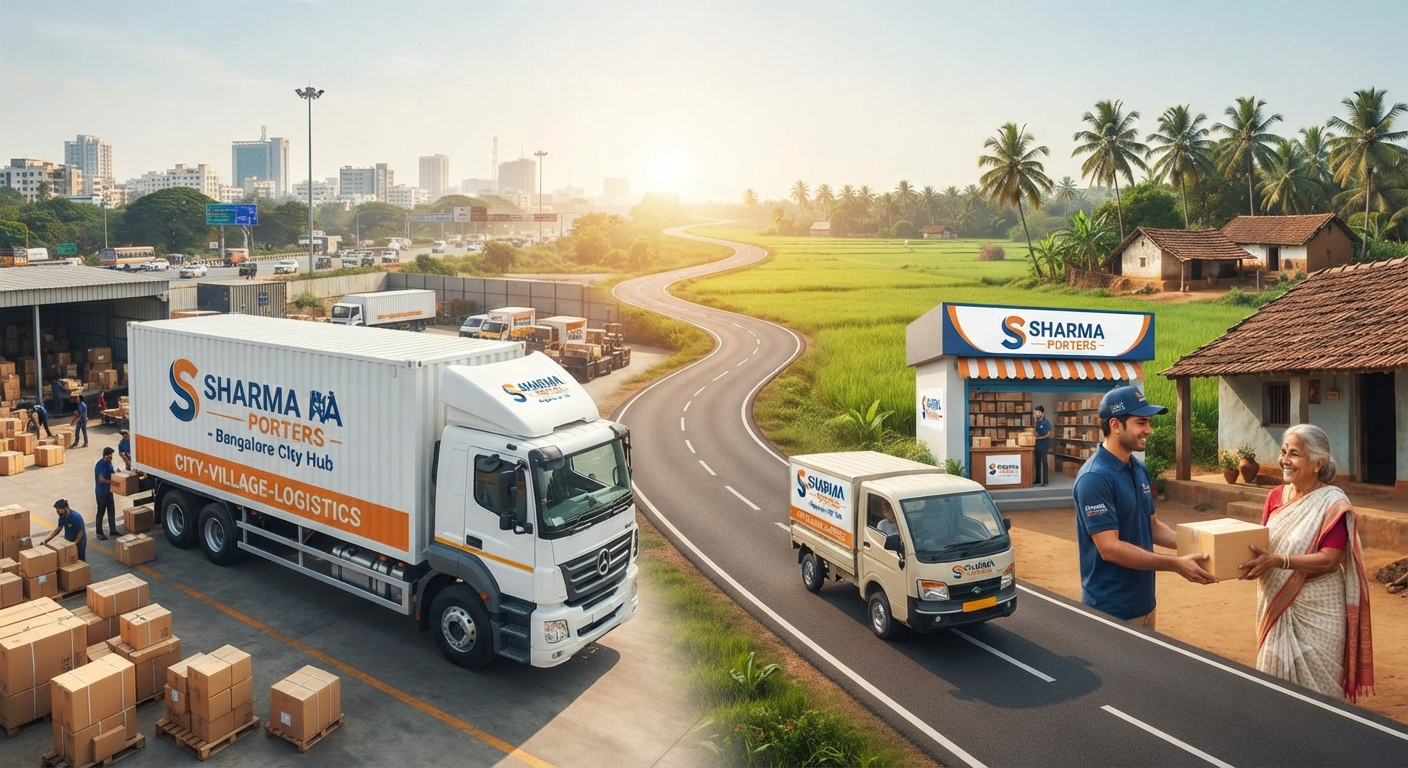
bangalore city village logistics
The Rise of City-Village-Logistics: Bridging India's Consumption Shift
As Tier-2 and Tier-3 urban centers absorb over 90% of consumer growth and manufacturing expands across industrial corridors, the traditional "metro-to-metro" supply chain model is hitting a wall. Urban congestion and soaring real estate costs make mega-city-only warehousing unsustainable.
The next frontier is City-Village-Logistics—a seamless pipeline connecting overcrowded metropolitan and breakout urban nodes directly to high-consumption village belts and emerging regional clusters.
Why City-Village-Logistics is India’s Next Big Economic Engine
- Decentralized Wealth & Consumption: With nearly 500 regional cities and surrounding village hinterlands logging massive leaps in disposable income, demand is no longer restricted to top-tier megacities.
- Infrastructure Maturation: Government outlays on national highways, dedicated freight corridors, and multi-modal logistics parks are compressing transit times between core industrial zones and remote areas.
- The Manufacturing-to-Market Loop: Backed by production pushes in electronics, EVs, and capital goods, factories built in state-backed clusters need an agile, capillary distribution network to push goods outward, rather than just upward into metropolitan hubs.
Core Blueprint for City-Village-Logistics
|
Operational Layer |
Traditional Model |
The City-Village-Logistics Model |
|
Warehousing Real Estate |
Concentrated in expensive Tier-1 metro peripheries |
Distributed micro-warehouses and dark nodes spanning Tier-2/Tier-3 corridors |
|
Fleet Dynamics |
Heavy multi-axle trucks traveling long-haul hub-to-hub |
Hybrid fleets (heavy haulers to regional EVs and local two-wheelers) |
|
Network Reach |
Ends at major urban wholesale markets |
Extends deep into rural village clusters and breakout towns |
Strategic Imperatives for the Future
- Hub-and-Spoke Sprawl: Establishing secondary fulfillment nodes in breakout cities like Belagavi, Nashik, or Raipur to act as staging grounds for remote village deliveries.
- Tech-Enabled Visibility: Deploying lightweight inventory and tracking protocols to bridge the information gap between urban manufacturing output and rural consumption points.
- Asset-Light Micro-Entrepreneurship: Integrating local retail networks and rural shop owners as community pickup and fulfillment touchpoints to solve last-mile friction sustainably.
Take a ride through the numbers: As India scales toward a multi-billion-dollar logistics market, the winners won't just control the metros—they will master the unbroken corridor connecting the city to the soil.
Why New Transporters Should Build Around City-Village-Logistics Services
For a new transporter stepping into the logistics industry, trying to out-muscle established enterprise fleets in overcrowded metro-to-metro corridors is an uphill battle. The real goldmine—and the most resilient business model—lies in capturing the untapped potential of City-Village-Logistics.
Here is why new operators should build their entire foundation around this model:
1. Untapped Market Demand & Lower Competition
- The Metros are Oversaturated: Major trucking lanes between Tier-1 hubs are heavily commoditized, leading to brutal price wars dominated by legacy logistics giants.
- The Hinterland Gap: Tier-2/Tier-3 cities and surrounding villages are experiencing a massive surge in consumption, but they lack reliable, organized supply chain links. Building here means you are creating the market, not just fighting for scraps.
2. High Resilience and E-Commerce Tailwinds
- Booming Village Consumption: With rising disposable incomes, village households are buying everything from consumer electronics and home appliances to agricultural machinery.
- Direct-to-Village Commerce: Brands are aggressively pushing to reach deep into regional clusters. A transporter who can guarantee safe, trackable passage from city warehouses to remote village doorsteps becomes an indispensable partner to these brands.
3. Capital Efficiency and Scalability
- Agile Fleets Over Heavy Debt: You do not need a massive fleet of 40-foot container trucks on day one. City-village logistics thrives on a hybrid hub-and-spoke model using medium-sized trucks for the city-to-regional leg and nimble two-wheelers or localized light commercial vehicles (LCVs) for the final village stretch.
- Micro-Hub Synergy: By setting up or partnering with small local shop owners in rural areas as collection points, you keep fixed infrastructure costs low while expanding your physical footprint rapidly.
4. Building Deep Local Trust and Defensibility
- Solving the "Fake Movers" Crisis: In an industry plagued by fraud, ghost operators, and unreliable actors, a new transporter who builds a transparent, localized, and verifiable network instantly stands out.
- Community-Rooted Loyalty: When you connect a village to the economic heartbeat of the city, you aren't just moving boxes—you are building long-term relationships with local merchants, farmers, and regional businesses that national giants cannot easily replicate.
Take a ride toward sustainable growth: Building your transport business around City-Village-Logistics positions you right where India's future consumption is heading, turning local connectivity into your greatest competitive moat.
10 Q&As on Why Tier-2 & Tier-3 Cities are the New Logistics Business Hubs (City-to-Village Transport)
Q1: Why are Tier-2 and Tier-3 cities rapidly replacing metros as primary logistics business centers?
A: Major metropolitan areas like Mumbai and Delhi are facing severe challenges, including chronic traffic congestion, skyrocketing real estate prices, and high operational overheads. In contrast, Tier-2 and Tier-3 cities (such as Indore, Coimbatore, Nashik, and Raipur) offer affordable land for modern warehousing, lower labor costs, and strategic proximity to high-growth regional consumer markets.
Q2: How has India's consumption pattern shifted to favor non-metro logistics?
A: Over 90% of incremental consumer growth is now decentralizing away from top-tier megacities. Rising disposable incomes, deeper digital and financial inclusion, and aggressive e-commerce penetration mean that smaller towns and surrounding rural pockets are driving the next wave of retail and industrial demand.
Q3: Why is the "City-to-Village" supply chain becoming essential for modern transporters?
A: Traditional logistics focused heavily on heavy long-haul lanes between major metros. Today, products manufactured or stored in regional urban hubs must bridge the gap directly to high-consumption rural villages. Mastering this "City-Village-Logistics" corridor creates a high-margin, resilient business model that avoids overcrowded metro competition.
Q4: What role do government infrastructure projects play in this shift?
A: Massive public investments through programs like the Bharatmala Pariyojana, PM Gati Shakti, and dedicated freight corridors have dramatically reduced transit times between manufacturing clusters and regional towns. Smooth multi-modal connectivity makes it feasible to run predictable, timed supply chains from cities deep into rural terrain.
Q5: Why is there an emerging demand for small and medium trucks (LCVs and ICVs) in this corridor?
A: While heavy multi-axle trucks handle long-haul city-to-city trunking, the distribution leg from regional urban hubs to rural villages requires flexible capacity. Light Commercial Vehicles (LCVs) and Intermediate Commercial Vehicles (ICVs) are agile enough to navigate narrow rural roads, handle smaller payload batches, and provide the frequency required by modern retail and FMCG supply chains.
Q6: When and why are big trucks required in City-to-Village logistics networks?
A: Big trucks (Heavy Commercial Vehicles) form the backbone of the primary leg—hauling bulk inventory from central manufacturing plants or national warehouses directly to regional fulfillment hubs established in Tier-2/Tier-3 breakout cities. From those urban staging grounds, the cargo is broken down and transloaded onto smaller trucks for village distribution.
Q7: How do e-commerce and quick-commerce tailwinds influence this transport demand?
A: Consumers in non-metro regions expect the same delivery speeds and product variety as metro residents. As brands push inventory closer to consumers through decentralized micro-warehousing, the frequency of shipments increases, triggering a massive surge in demand for reliable commercial vehicle fleets.
Q8: What are the unique operational challenges of moving goods from cities to villages?
A: Transporting goods along the city-village corridor involves navigating rural infrastructure constraints, such as unpaved paths, landmark-based addressing systems, and fluctuating demand cycles. Transporters need agile fleets, local route intelligence, and digital tracking to prevent delivery failures and margin erosion.
Q9: Why is establishing micro-warehousing in Tier-2/Tier-3 cities a game-changer for fleet owners?
A: Decentralized warehousing allows transport operators to position inventory closer to rural hinterlands. This cuts down empty return trips, lowers fuel burn, and allows fleets to use smaller, more cost-effective vehicles for the final village distribution leg rather than relying on expensive long-distance runs.
Q10: How can new transport operators capitalize on the City-Village-Logistics opportunity?
A: New operators should avoid getting trapped in brutal price wars on saturated metro routes. Instead, they should build hybrid, trust-driven networks centered around Tier-2/Tier-3 hubs—combining mid-sized trucks for regional connectivity with local micro-entrepreneur partnerships for village doorsteps—transforming local connectivity into a powerful competitive moat.
Build the Future of Transport with Sharma Porters
The logistics landscape in India is undergoing a massive structural shift. The old playbook of relying solely on congested metro-to-metro corridors is fading, while the real economic momentum is surging outward into Tier-2, Tier-3, and regional village belts.
Whether you are looking to move commercial freight, secure dependable regional transport from Bangalore to key destinations like Hubli or Chittoor, or establish a resilient new transport business, the path forward is clear. To explore our complete strategic roadmap, network blueprints, and operational frameworks, visit our official resource page: City-Village-Logistics
Take a ride toward trusted, transparent, and village-connected logistics with Sharma Porters today!
Gallery